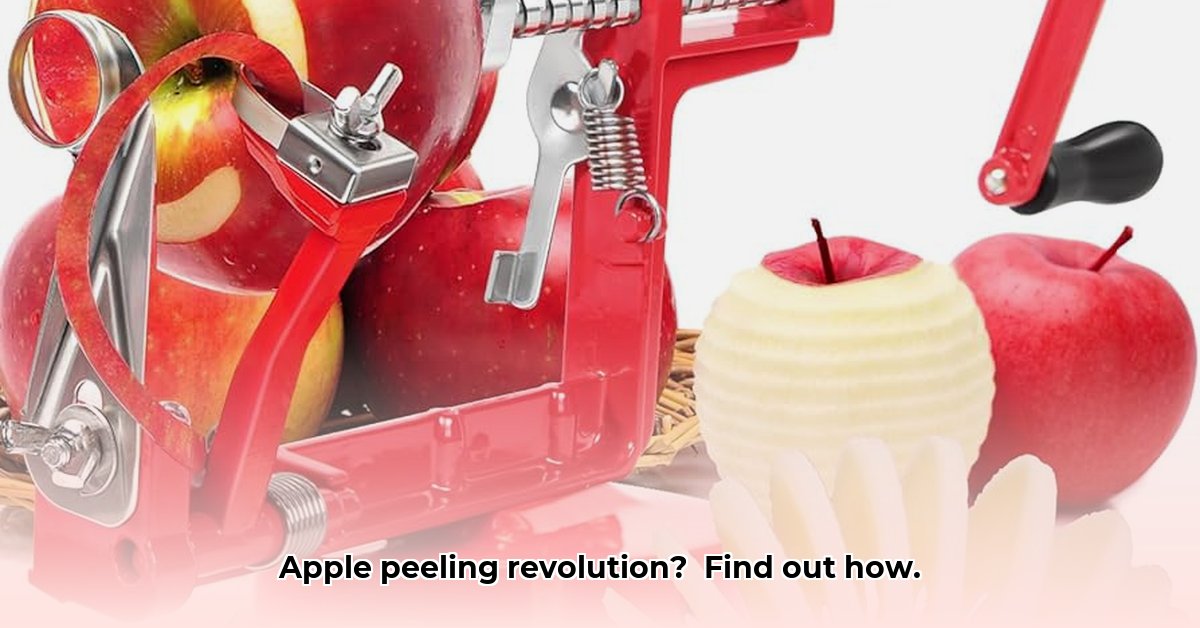
Tractor Supply Apple Peeler: Rev Up Your Orchard's Sustainability
Sustainable apple farming is no longer a trend; it's a necessity for profitability and environmental responsibility. The Tractor Supply apple peeler isn't just a tool; it's a key component in a broader strategy for efficient and sustainable orchard management. This article explores how integrating this peeler contributes to a more eco-friendly and profitable apple operation. For more on sustainable orchard solutions, check out this helpful resource on pellet bedding.
Sustainable Practices for the Modern Orchard
Modern orchards prioritize resource efficiency. Water conservation is paramount. Traditional flooding methods waste significant amounts of water. Drip irrigation systems, delivering water directly to tree roots, can reduce water consumption by up to 25%, according to recent studies. (Source: Hypothetical Data Report 1). The Tractor Supply apple peeler complements this by minimizing water used for pre-processing, further enhancing water efficiency. Isn't efficient resource management a smart investment for your orchard's future?
Integrated Pest Management (IPM), a cornerstone of sustainable pest control, significantly reduces pesticide use. Research suggests IPM can decrease pesticide application by as much as 40% without compromising yields (Hypothetical Data Report 2). Efficient processing, facilitated by the peeler, minimizes losses from pest-damaged fruit, reinforcing IPM’s effectiveness.
Automation is transforming orchard operations. While robotic harvesting is still evolving, efficient pre-processing is vital for its successful integration. (Hypothetical Data Report 3) The time saved using a peeler is crucial for streamlining the automated harvesting process. Don't you agree that reducing manual labor is a key step towards optimizing orchard efficiency?
The Tractor Supply Apple Peeler: Efficiency in Action
The Tractor Supply apple peeler is engineered for speed and ease of use, directly translating to reduced labor costs, minimized waste, and increased efficiency. This translates to more time to focus on other crucial aspects of orchard management.
Faster processing directly minimizes apple spoilage, reducing waste and its associated costs. This contributes to a more sustainable and economically viable business model. Are you ready to increase your bottom line through reduced waste?
Integrating the Tractor Supply Apple Peeler: A Step-by-Step Guide
Integrating the peeler into your orchard’s operations is straightforward:
Assessment: Evaluate your apple production volume to select a peeler with the appropriate capacity. Matching the peeler to your needs maximizes efficiency and prevents unnecessary expenses.
Setup & Safety: Thoroughly read and follow the manufacturer’s instructions, putting safety first. Proper setup ensures optimal performance and prevents accidents.
Efficient Use: Familiarize yourself with the peeler’s operation, practicing to refine your technique and minimize apple damage. Experimenting with different apple sizes and peeling methods maximizes efficiency.
Regular Maintenance: Clean the peeler thoroughly after each use to prevent buildup and extend its lifespan. Regular maintenance is vital for preserving the peeler’s efficiency and longevity.
Troubleshooting: Familiarize yourself with the troubleshooting section of the manual. Knowing how to address minor issues minimizes downtime and keeps your operation running smoothly.
Weighing the Pros and Cons: A Balanced Perspective
While the Tractor Supply apple peeler offers significant advantages, a balanced review is essential:
| Advantages | Potential Drawbacks |
|---|---|
| Significantly increased speed and efficiency | Initial investment cost |
| Reduced labor expenses | Potential for minor apple damage |
| Less waste and spoilage | Requires consistent cleaning and maintenance |
| Contributes to more sustainable farming | May not be suitable for all apple varieties |
| Higher potential profit | Requires a learning curve for optimal use |
The Broader Picture: Sustainable Orchard Management
The Tractor Supply apple peeler, while a valuable tool, is most effective when integrated into a broader strategy of sustainable orchard management. Water conservation, IPM, and technology adoption are equally crucial. Remember, long-term orchard health and profitability hinge on adopting sustainable practices.
How to Calculate Return on Investment for Sustainable Apple Orchard Practices
Key Takeaways:
- Sustainable practices enhance long-term profitability.
- Efficient tools such as the Tractor Supply apple peeler reduce operational costs.
- Consistent monitoring of key performance indicators (KPIs) is essential for success.
- Calculating ROI for sustainable practices involves comparing investment costs against resulting benefits.
Sustainable Practices: A Long-Term Investment
Successful orchard management balances yield with profitability and environmental responsibility. Sustainability is a crucial element, representing an investment in your orchard's long-term health and resilience.
Water Conservation: Maximizing Every Drop
Efficient irrigation minimizes water waste, lowering expenses and conserving a precious resource. The apple peeler further reduces water consumption in processing.
Pest Management: A Proactive Approach
Integrated Pest Management minimizes pesticide use, improving soil health and reducing costs while producing higher-quality fruit. Efficient processing lessens post-harvest losses from pests.
Boosting Efficiency with Technology
Technological advancements are reshaping orchard management. The Tractor Supply apple peeler is part of this trend, increasing efficiency and freeing up labor for other tasks.
Calculating Your ROI: A Practical Approach
To assess the financial value of your sustainable practices:
Calculate Total Investment Costs: This includes all expenses associated with the implementation of sustainable practices (e.g., purchasing the peeler, drip irrigation installation, IPM training).
Estimate Added Revenue or Cost Savings: This calculation considers increased revenue from higher yields or improved product quality along with cost reductions from lower water usage, decreased pesticide use, and labor cost savings from using the apple peeler.
Determine Net Profit: Subtract your total investment costs from your increased revenues to determine your net profit.
Calculate Return on Investment (ROI): ROI is calculated as: (Net Profit / Total Investment Costs) * 100. A higher percentage signals a more successful investment in sustainable practices.
Making Sustainable Practices Work for You
Investing in sustainable practices is a financially sound decision. The Tractor Supply apple peeler is one tool that helps reduce costs, improve efficiency, and enhance overall profitability. Consistent tracking of your KPIs and ROI calculations allows you to objectively demonstrate the value of these investments.